A2 milk sourcing
A2 Milk Sourcing — Gir & Kankrej, Sourced Across Gujarat
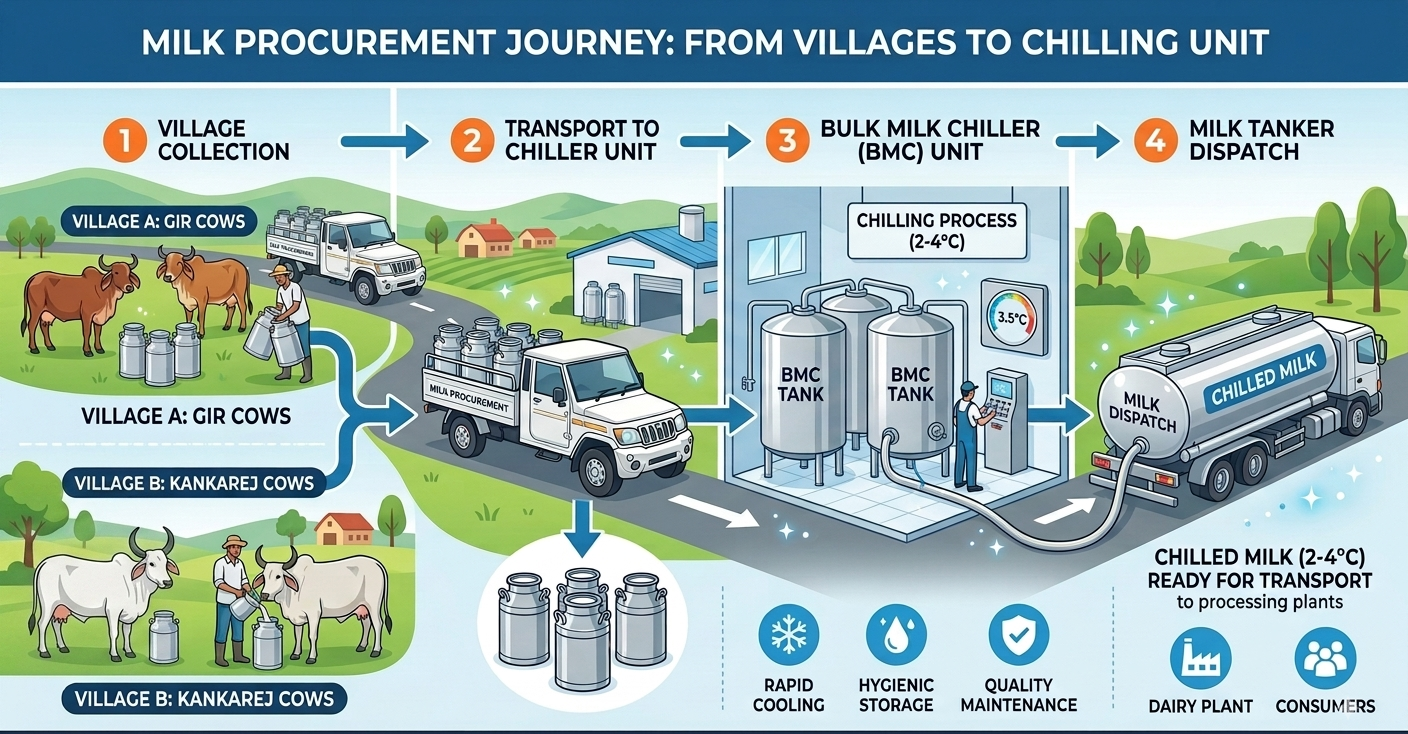
Village collection, screening at receipt, chilling within the hour and one batch identity all the way to your plant. This is the sourcing engine behind our bulk A2 cow milk supply — set out stage by stage for procurement and QA teams.
- Registered farmer network
- Bulk milk coolers at 4 °C
- Batch identity end to end
- 2×
- Village-level milk collection cycles every day
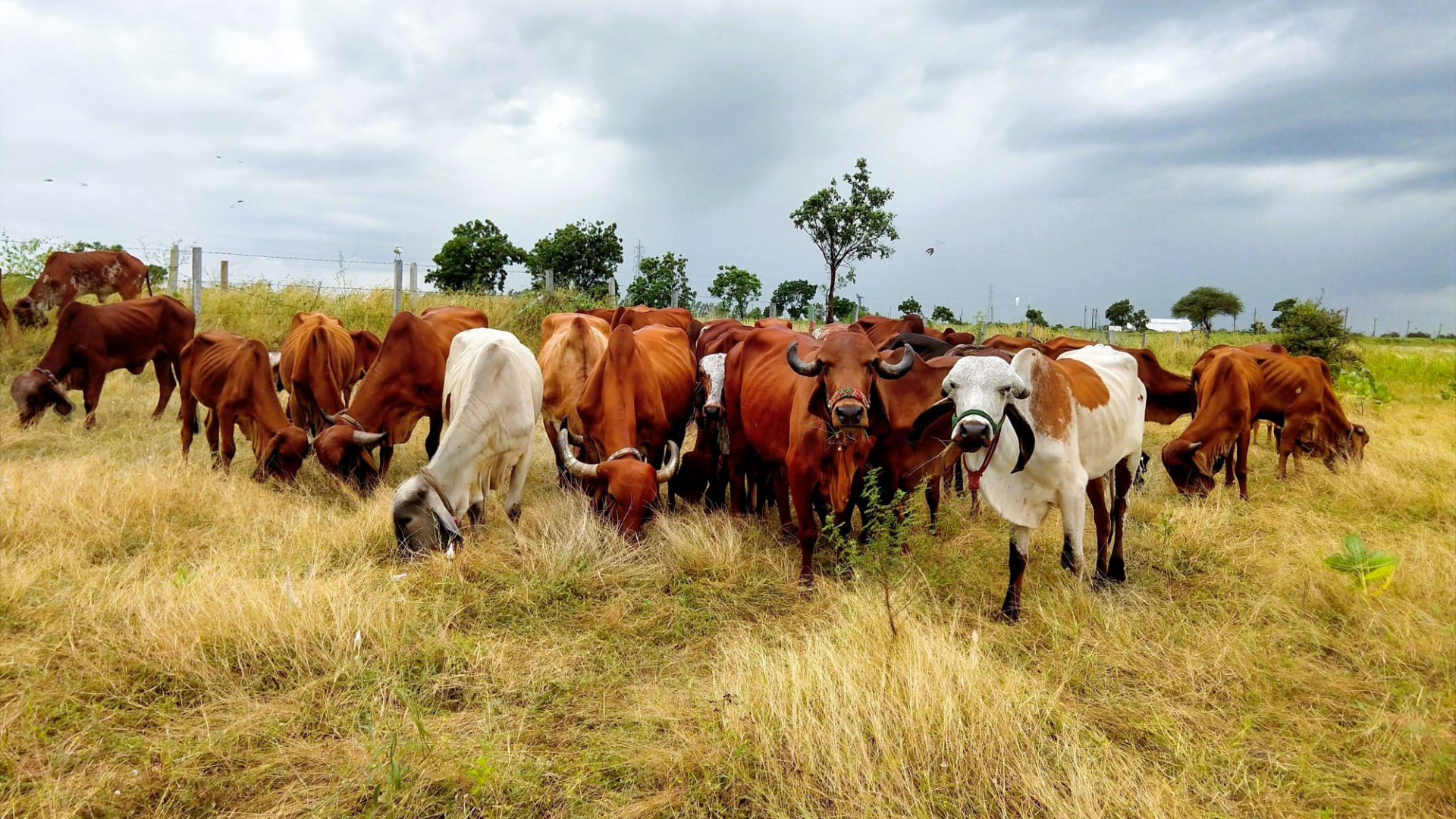
- Gir & Kankrej
- Indigenous breeds in the Gujarat sourcing catchment
- 4 °C
- Target chilling temperature at bulk milk coolers
- 1 lot
- Single batch identity from collection to unloading
Stage by stage
From Farmer Network to Dairy Plant
Farmer network
Registered herds
Collection
Twice daily
Screening
FAT · SNF · acidity
Chilling
Bulk milk coolers
Batching
One lot identity
Despatch
Sealed tankers
- STEP 01
Farmer network
Milk is sourced from registered smallholder farmers keeping Gir and Kankrej cattle across our Gujarat catchment. Farmer and herd details are recorded and maintained.
- STEP 02
Milk collection
Collection happens twice daily at village-level centres. Quantity, farmer identity and screening results are captured at the point of receipt.
- STEP 03
Quality screening
FAT, SNF, acidity, alcohol stability and adulteration screens are run at collection. Non-conforming milk is rejected before it can affect a pooled lot.
- STEP 04
Chilling
Accepted milk is chilled at bulk milk coolers. The interval from milking to reaching holding temperature is recorded, because it is the strongest predictor of keeping quality.
- STEP 05
Batching & traceability
Chilled milk is consolidated into a lot with one batch identity linking contributing collection centres, screening data and chilling records.
- STEP 06
Despatch to plant
Released batches are loaded into insulated road tankers with seals, loading temperature and transit details recorded against the batch.
Cold chain
Chilling Decides Bulk Milk Quality
Raw milk leaves the animal at body temperature and carries an initial microbial load. Every hour before chilling multiplies that load; no amount of downstream testing reverses it.
- Chilling capacity positioned close to collection to shorten the interval
- Holding temperature monitored and logged at each cooler
- Cleaning-in-place records maintained for tanks and lines
- Loading temperature verified before a tanker leaves
Traceability
Traceability You Can Audit
Given a delivered tanker, we can move backwards through despatch record, batch identity, laboratory release, chilling log and contributing collection centres to the farmer records behind the lot. Buyers running supplier audits are welcome to test this on a live consignment.
Talk to our procurement team
Request a bulk milk quotation
Share your daily or monthly volume, breed preference, destination and quality specification. Our procurement team responds with an indicative commercial proposal and a sample Certificate of Analysis.